Showing posts with label Gender. Show all posts

Friday, June 11, 2010

The Cell Analogy: The Cell- Part 2 Modern Day and Technology

In light of yesterday's post, as well as some of the positive feedback I received from some commentators (thanks Neal and Ben), today's post will continue in a similar vein (pun intended!). This is the second installment in a series of posts relating to my more scholarly trilogy about my ongoing argument that methods of gender exploration in the Renaissance echo that of today's modern blogosphere. In yesterday's post we used a muscle cell analogy in our exploration of gender exploration during the Renaissance. Today, let's use the same basis for our analogy, the cell, just a different type of cell. The red blood cell!
Now before I go any further, you might be thinking, "Ok, Becca if we're going to form a tissue for the next part of your analogy, red blood cells don't form a tissue, they form a liquid, blood!" Yes, that's true, but did you know blood IS a type of connective tissue. So thus my analogy still works!

Self-Expression Online
The World Wide Web has become a way of life for Americans. An article by The New York Times shows,
At home, people consume 12 hours of media a day on average, when an hour spent with, say, the Internet and TV simultaneously counts as two hours. That compares with five hours in 1960, say researchers at the University of California, San Diego. Computer users visit an average of 40 Web sites a day, according to research by RescueTime, which offers time-management tools.
Social networking sites, Facebook and blogging sites above the rest, have become social platforms for people to "update" about themselves. A colleague, Amanda, did some research on this topic of self-disclosure on the internet and its effects. She found an article published by The Open University where studies found,
"New, meaningful relationships can be formed in cyberspace because of, not despite, its limitations." He (Reingold) further argues that `the medium will, by its nature...be a place where people often end up revealing themselves far more intimately than they would be inclined to do without the intermediation of screens and pseudonyms'. Wallace (1999) argues that `The tendency to disclose more to a computer . . . is an important ingredient of what seems to be happening on the Internet'
In the same post, Amanda also makes reference to a New York Times article "Brave New World of Digital Intimacy" in which it states,
It is easy to become unsettled by privacy-eroding aspects of awareness tools. But there is another — quite different — result of all this incessant updating: a culture of people who know much more about themselves.
So what's the point of all this? It is important to understand that today's internet is part of self discovery. Traditional objective methods of evaluating and judging another have all but vanished with the emergence of social networking sites where representation is highly subjective.

Enter the theory of disembodiment and use of avatars.

Disembodiment= The idea that while one requires the use of the body to connect to the Internet, once the user is online, the need for the body is no longer required, and the user can participate completely separately to it. This ultimately alludes to a sense of detachment from the identity defined by the physical body (Sexual Identity Online)

As a person creates an online avatar (a manifestation; display [OED]) sexual and gender representation becomes a choice! Just as we discussed in yesterday's post, the transvestite theater used costumes and adopted characteristics of the gender they were portraying to assist their audience in how to understand their words, the "costume" a computer user "dresses" their avatar with (profile pictures, username, color themes, music play lists, widgits, word font, etc.) creates a gender base which readers use to interpret the words.

Which Implies...
If we all have both masculine and feminine aspects within our biologically biased body, and if we are no longer constrained by biological factors which bias a listener to what we say, perhaps just as Elizabeth was able to convincingly manifest her masculine parts without her audience having a bias, a writer on an online social networking site, such as a blogger, could either create a bias in his readers by obviously "dressing" his avatar with gender "indicators," or remove that bias through removing any gender indicators and having the words speak for themselves. Yesterday we explored the idea that we are all hermaphroditic in gender and that situation dictates what role we are to play. The idea of removing gender indicators presents the possibility of a hermaphroditic reading of a text. One where the reader not only understands things from both a masculine and feminine view point, but where the words themselves promote an unbiased reading in terms of gender. Can you read a text without trying to guess "Who wrote it?" Can you take words for simply that, words and ideas?

Gender exploration is just one "cell" of the many issues (culture, social class, economic status, race, etc.) which make up the "tissue" of "Online Identity," the next topic to be explored in my series on "The Big Picture" of why understanding that transvestite theater exploration of gender during the Renaissance echos that of today's blogosphere matters! So stay tuned!

Thursday, June 10, 2010

The Cell Analogy: The Cell- Part 1 Renaissance and Transvestites


In light of my previous post regarding the "Bigger Issue", or the "So What?" part of my ongoing argument that methods of gender exploration in the Renaissance echo that of today's modern blogosphere, I decided to go with the analogy I used in yesterday's post to create another series of posts which echo my more scholarly trilogy exploring this same topic. Each constituent part of this series builds upon the next to create the "Big Picture" in the end. Note, I am a science freak, thus the biological analogy.
Let's start with the issue of gender identity, particularly let's explore a female taking masculine roles.
Thanks to my colleague, Neal, and his comment on a previous post, this post will address Renaissance exploration of gender and Queen Elizabeth's role in that exploration differently than in previous posts. Neal suggested including more in terms of the transvestite theater and how Elizabeth's Tilbury Speech "performance" echos that prominent social platform.

Renaissance Society
The Renaissance was a homosocial society prominently male dominated, yet the crown was held by a queen, Elizabeth Tudor, who claimed to be a King and "convert[ed] her reign, through the perpetual love tricks that passed between her and her people (Bedford). Her reign was during the height of the transvestite theater in England, this type of theater being a place where men and boys dressed and played both male and female roles. In addition to adopting the dress of female characters (as the definition of "transvestite" is "One who wears the clothing of the opposite sex" [OED]), the male actors adopted characteristics usually associated with the female gender and performed accordingly.

Transvestite theater
=male actors taking a female role, combining both physical appearance, or sex, of a female as well as feminine mannerisms, or the feminine gender.

Switching Roles
Elizabeth was once quoted saying "We princes, I tell you, are set on stages, in sight and view of all the world" (Bedford). Standing on that political stage (her passion was the theater of politics [Bedford]), Elizabeth adopted both traditional and transvestite roles as necessity dictated. In her famous Tilbury speech where she rallied her men against the threat of the Spanish Armada, Elizabeth played the role of the men's general, judge and leader, boldly proclaiming "I have the heart of a King- and a King of England too." Visually, Elizabeth fulfilled her male role by donning the "costume" of battle armor from the waist up and even claiming her physical features to be that of a King, the title "King" typically associated with the male position in monarchy. When it is understood that "Renaissance historiography constituted a masculine tradition...devoted to the deeds of men, glorifying the masculine virtues of courage, honor and patriotism" (Rackin) and we read of Elizabeth promising to her men "By your obedience to my General, by your concord in the camp, and your valour in the field, we shall shortly have a famous victory over these enemies of my God, of my kingdom and of my people" we see she is recognizing those three elements of courage, honor and patriotism and participating in a very masculine tradition of honoring those characteristics of her men.

Many "Me's"
Just as you dress differently for a presentation than when you go to the gym, presentation of self differs depending on situation. Did Elizabeth use masculine characteristics and clothing to permanently make herself male? No, in fact all the pictures painted of her depict her in lavishly feminine attire. The situation at Tilbury necessitated the emergence of her more masculine "Me," the novel aspect here being she, as a female, seemed to possess masculine qualities which she readily put forth. Situation creates gender characteristics. Is that a fair statement to make? If Elizabeth were married I feel it safe to say her husband would have been out there, rallying the men. Yet she wasn't married. She was the monarch, the King, the masculine leader her men needed at that point. This emerging masculinity creates the idea of the hermaphrodite, a being with both sets of masculine and feminine characteristics. Could this be characteristic for all, not just females? Do we all possess pieces of our other hermaphroditic half (see my previous post, The Hermaphrodite, for more on the idea of the hermaphrodite) and simply suppress those pieces to create a dominant gender? It seems the bolgosphere suggests this is possible and possibly occurring right now...more on that next!

Tuesday, June 1, 2010

The Hermaphroditic Sovereign: Renaissance Exploration of Gender

Gender exploration emerged as a socially accepted practice under the guise of the transvestite theater during the Renaissance time period. Phyllis Rackin, a well known scholar on the subject of gender studies during the Renaissance commented "Recent literary historians have pointed out that the English Renaissance theater was an important site of cultural transformation- a place where cultural change was not simply reflected but also rehearsed and enacted. The theater provided an arena where changing gender definitions could be displayed, deplored, or enforced and where anxieties about them could be expressed" (Rackin). The biggest paradigm shift in terms of gender exploration came packaged as England's female King, Elizabeth Tudor. The date is August 18, 1588 in Tilbury England, when Queen Elizabeth addressed her militia in what has become one of her most memorable speeches, the Tilbury speech. This public appearance takes on a transvestite theater tone as Elizabeth played with wording and visual appearance to shape her words and image into one which is both masculine and feminine in gender and male as well as female in sex, making her claim of being England's king, although biologically not fitting that description, legitimate upon foundations of gender (the social role one plays which are masculine or feminine in nature), not sex (the biological factors which determine one to be male or female), qualifying one for position as King.

The Digital Hermaphrodite

Hermaphrodite; the term smacks of disorder and confusion to the gender and sex-oriented world humanity creates and expects. The name itself, derived from "Hermes" and "Aphrodite," reveals this complicated nature and represents a masculine and feminine union divined by the gods. Much of society's reluctance to accept this figure is derived in part from its ambiguous nature and inconclusive representation within literature. Yet, what if literature, both formal and informal, became the means whereby the idea of a masculine and feminine knowledge could be brought to life in a socially acceptable manner? The implications of such a claim imply that one person, a writer, could utilize the medium of literature and, through words and associated imagery, become one physical body representing the idea of hermaphroditism, a wholeness of knowledge achieved through understanding which is both masculine and feminine in nature.

Language used by an individual transmits more communic
ation than the words themselves give meaning to. Though text itself is genderless, it has been found that the use of certain words and linguistic structures are more frequently utilized by one gender or another. This fact was noted in an article exploring gender identity in relation to blogs when it reports, "The communication patterns of males and females often differ, with males using a direct and forceful style while females use a more indirect and intimate style of interaction" and continues on giving specific examples of such communication patterns. This is one fact central to a writer exploring a gender other than his or her own. Words themselves can be used to reveal the chosen masculinity or femininity of the author, whether or not that gender is in accordance with the author's sex. Words are not the only form of communication which contain gender indicators. This being the case, there is another factor which plays a prominent role in assigning gender to a text, visual appearance.

Text constitutes what is read and visual appearance of and surrounding a text contributes to how a text is read. The Renaissance, a prominently homosocial and male dominated society, makes for rich studies of emerging ideas concerning gender. These surfacing ideas were brought to social consciousness through the transvestite theater whose basis played upon this notion of visual appearance indicating how a text was to be interpreted in relation to gender bias. Costumes assigned gender to the actor and their lines regardless of sex. Elizabeth Tudor herself, master of this social transvestism, integrated this theatrical practice within her reign as Queen of England one of her more noted "performances" occurring during her speech in reaction to the threat of the Spanish Armada.

Fast forward nearly four hundred years and this same principle of appearance influencing the reading of a text through a gender-oriented paradigm has made its mark on the modern social scene through an interesting medium, the World Wide Web. This virtual reality is the social stage of the twenty-first century. Social networking sites become ideal forums utilized to explore gender identities by creating avatars, electronic images that represent a computer user. On this virtual platform, users can masquerade as any gender
identity they choose and perform for their virtual audience accordingly. Similar to the Renaissance's transvestite disguise, men can take on female avatars and vise-versa with the online community none the wiser. The transvestite theater's use of gender-oriented language and visual appearance to interpret a text is echoed in the modern century's blogosphere creating a socially accepted forum for exploration of gender orientation.

The implications of such a forum become apparent when seen in the light of the hermaphrodite and the ideas this figure promotes. This androgynous being, both male and female anatomically speaking, possesses a complete, unbiased state of knowledge and is the ideal state of human knowledge, possessing both a masculine and feminine gender paradigm with which to understand the world. The workings of the transvestite theater are echoed in today's modern blogosphere, both working as social platforms creating a stage wher
e a mindset containing wholeness of gender-based perspective and knowledge becomes possible from a gender-oriented mind.

A/N: This is the first in a series of three blog posts which explores the idea of the hermaphrodite as related to the Renaissance and modern digital age.
  1. The Digital Hermaphrodite
  2. The Hermaphroditic Sovereign: Renaissance Exploration of Gender
  3. Avatars: Exploration of Gender in the Digital Age

Tuesday, May 25, 2010

Color Me Feminine...


Gender...it's all monkey business, right? You've never been so right! In 2002 Texas A&M (author places hand over heart in respect for the mere idea the word "Texas" brings about) conducted a study in which male and female vervet monkeys were given the choice between masculine and feminine toys. Monkeys were used because they supposedly have not been socialized to know "boy" toys from "girl" toys. The result: male monkeys went for the masculine toys while females went for the feminine. Suggested reasons: toy movement and...appearance!
"Females may have evolved preferences for object color, relating to their roles as nurturers. A preference for red or pink – the color of the doll and pot – has been proposed to elicit female behaviors toward infants that enhance infant survival, such as contact."
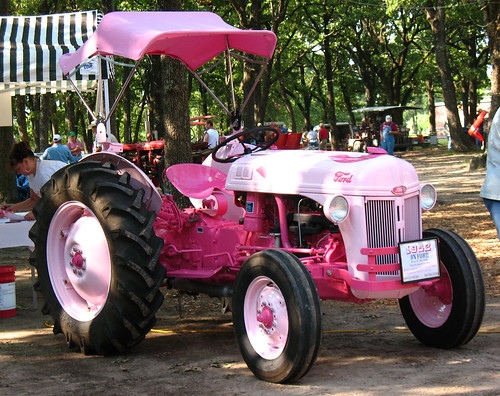
Appearance can affect the perceived masculinity or femininity of an object. As a female, I'm not particularly interested in tractors (something my younger brother is fascinated by) but when I saw a PINK tractor...now we're talking!
The Reainssance, with all its transvestite and homosocial glory, is the perfect time period to do a "Now and Then" comparison. Here's the "Then," the "Now" comes in the next post.
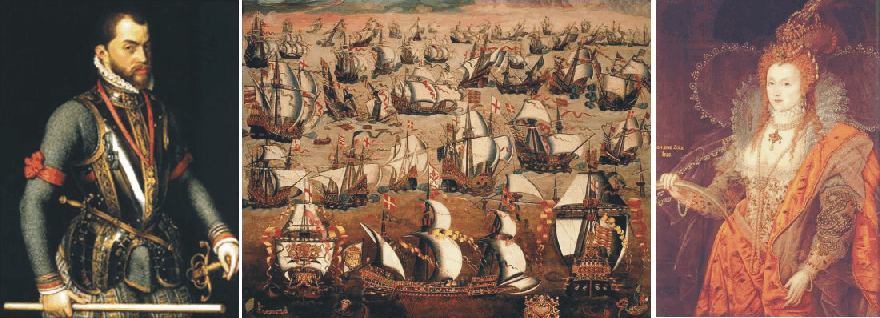
Queen Elizabeth, the female King of England, knew how to shape public opinion concerning her gender through words (as discussed in my last post) and appearance. An excellent example, her reaction to the threat of the Spanish Armada. Against the counsel of her adviser, Elizabeth dressed in armor from the waist up (wearing a skirt waist down) and stood boldly before the crowd of militia to address the men in what is one of her most famous speeches, the Tilbury Speech. The militia being so large, runners were sent into the crowd and on a cue they read Elizabeth's speech in sync with her. Here Elizabeth, a female, is standing dressed as a man and the audience hears her proclaim in a man's voice (due to the male runners reading the speech) "I have the heart and stomach of a King- and a King of England too." Elizabeth used visual appearance to her advantage, here dressing as a soldier to address her military and aid her in convincing the men she is their "King" "Leader" and "General."
How much do visual gender cues dictate what you perceive, buy, and even think? You thoughts: