Tuesday, June 8, 2010

Courage in the Face of Death

Could you inspire courage in the face of death?

Imagine yourself standing in front of a group of soldiers in Iraq with the whole Al-Qaeda terrorist organization coming to destroy you. You are far out-weaponed, and out-numbered by the enemy. It is your duty, as the soldiers' leader, to inspire them to fight with all they have, though the outlook is bleak and death is almost certain. You turn, face your men and proclaim:

"I am come amongst you as you see at this time, not for my recreation and disport, but being resolved, in the midst and heat of battle, to live or die amongst you all- to lay down for my God, and for my kingdoms, and for my people, my honor and my blood even in the dust...I myself will will take up arms- I myself will be your general, judge, and rewarder of every one of your virtues in the field."

How would you say it?

Meekly, kindly, boldly, intensely? To inspire a group of men would you use a feminine approach or would you hone in on the masculine characteristics of bravery, boldness, intensely shouting your lines and transferring your earnest intensity to your soldiers?

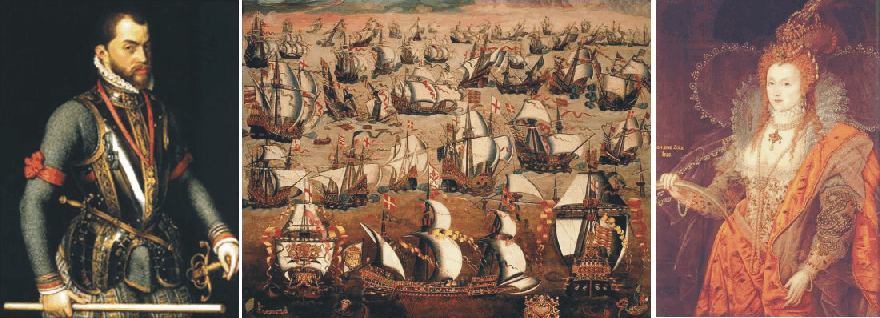
Let's go back to the literature which spurred this blog, Queen Elizabeth Tudor's Tilbury Speech. We have explored her use of actual words and of visual appearance so let's explore one more element to communication, tone of voice. Elizabeth's plight was similar to the one you just put yourself in. How do you think Elizabeth presented her speech? Though we don't have any recordings, I feel it safe to say, if she made efforts to enhance her masculinity through word choice and visual appearance (as I explored in my previous post), she probably did the same with her voice. I couldn't find a good audio/video recording of Elizabeth's speech, but this one is fairly good. Watch it. How would do things differently?

Remember, there were runners going through the crowd reading her speech in sync with her, but would you depend solely on those runners to exude the same intensity and tone you would? When we understand paralinguistics (the non-semantic aspect of speech--everything but the words themselves) plays as much as 38% of how our words are received it brings up an interesting question which doesn't really have any answer. Were the runners a necessity or theatrical element of her Tilbury performance? While it is pretty safe to say the runners were partly out of necessity, Elizabeth was too sharp to miss the advantage of her speech being read by a man's voice. This tactic is yet another manifestation showing her mastery of blurring the lines between biological reality and social perception. Her role became one which was not one of "masculine" or "feminine" but rather as their "general, judge and rewarder," their monarch leader, "A King of England."

Saturday, June 5, 2010

A Scholarly Vacation...

Have you ever wanted an excuse to fly to England? Well here you go, I'm giving you an excuse. Consider it a gift from me to you for reading my blog! Go tour England while easing your conscience and justify it in your mind by saying "This is for my intellectual growth!" This event is the one which has the Renaissance scholar community buzzing!


Cambridge International Chronicles Symposium- Authority and Gender in Medieval and Renaissance

This event is a biennial interdisciplinary conference organized to promote research and to strengthen the network of chronicle studies worldwide. The aim of the CICS is to allow scholars from various departments of learning and critical approaches to meet, present new research, demonstrate new critical approaches and discuss prospects for ongoing, collective research between scholars and academic institutions.

The date for the event is July 16-18, 2010 at the University of Cambridge.

Registration deadline was 31 May however late registration is possible through contacting the registration office. The registration fee is about $58 US dollars.

If you have ever attended/will be attending I would love to hear your report on previous/the current event! Cheers!

Friday, June 4, 2010

The Table of Content

Can a man write like a woman?
Can a woman write like a man?


Since then 'tis centuries, and yet each
Feels shorter than the day
I first surmised the horses' heads
Were toward eternity.

I have seen the moment of my greatness flicker,
And I have seen the eternal Footman hold my coat, and snicker,
And in short, I was afraid.

Which poet is the man and which is the woman, or are they the same sex?

How It Started
I am strangely fascinated with gender studies and for a long time have been intrigued by the question "Is there is a basic humanistic way with which to view the world?" I have struggled with the question "Can you see someone from a blank slate?" and always feeling gender-typing is so innately inbred since birth (pink baby blanket for girls and blue for boys) that I can't respond to someone as just human, rather only as masculine or feminine.

Enter the idea of the Hermaphrodite...

...and thus began the formulation of my answer.

Answer

It is possible for someone to have a blank slate, but not through removing socialized ideas of established gender. Many "intellectual" musings and lots of research later, my information has pointed to the opposite. We can view another human from a blank slate not through removing gender, rather paradoxically through combining gender and achieving a hermaphroditic wholeness of knowledge! Is it possible? Queen Elizabeth Tudor accomplished such a feat during the Renaissance and today the online blogosphere harbors a multitude of such figures, in fact, if you blog, have a facebook account, or an online avatar of any sort you might be one of them!

The Trilogy

This is synopsis of my trilogy blogs which analyze the hermaphrodite figure as played out in the Renaissance and in today's society. You can see my trilogy:
  1. The Digital Hermaphrodite
  2. The Hermaphroditic Sovereign: Renaissance Exploration of Gender
  3. Avatars: Exploration of Gender in the Digital Age
My entire blog, The Best Things in Life Aren't Hard to Find, is devoted to research and musings on gender issues regarding masculinity and femininity and the idea of the hermaphrodite in relation to those issues.

Who knows, maybe reading these articles will spur you to read the other blogs, comment and you will find a new way of viewing interaction with others.

The Digital Hermaphrodite
This is the core of my argument, the point or tip of my literary triangle. While explaining the Hermaphrodite as a literary figure, this post explains the relevance of the hermaphrodite in relation to the Renaissance transvestite theater, English monarchy and events, as well as making it pertinent to our day in relation to the modern social platform of the world wide web and blogosphere.

The Hermaphroditic Sovereign: Renaissance Exploration of Gender

Queen Elizabeth Tudor, reining monarch of England for 70 years (1533-1603) never married and ruled as a single sovereign, claiming her status as England's King. How can this be? The title "King" is attributed to a male body in the monarchy position, not female. Elizabeth pushed the idea that the position of King was not based upon biological factors, rather it was based upon the ability of a person to perform a masculine gender role. In one of her most famous speeches, the Tilbury Speech, Elizabeth combines her female body with masculine gender, making for a hermaphroditic figure visually and idealistically.

Avatars: Exploration of Gender in the Digital Age
Can you pose as a your opposite sex online? Can you master the elements of word choice, structure and visual appearance which ascribe gender in the digital world? The new social platform of the World Wide Web creates a convergence of both biological sex and gender role into the one "body" of the internet. More and more, creators of avatars, online social profiles, transform their "body" image to what ever they want biologically and that sex can either represent the real sex and gender of the computer user or not. Gender exploration made possible in part by blogging!

Thursday, June 3, 2010

Genderanalyzer!


GenderAnalyzer
Yesterday in my advanced writing class which spurred the creation of this blog, I received the assignment to explore other blogs and websites which are talking about issues similar to my topic and comment on those blogs. As I was doing some exploring I came across an AWESOME website called GenderAnalyzer. You take any web address, copy, paste and Genderanalyzer using "artificial intelligence" analyzes if a male or female created the web site as well as gives a percentage as to how sure they are in that analysis. As I have experimented with this tool it's so fun to use and especially relevant to the topic of words and visual design's effect upon a site's gender definition. I used three blogs as "tests," my blog, my colleague Ben's Research 2.0 blog, and my colleague Krista's gender ambiguous Uffishsthoughts blog...GenderAnalyzer got it right each time (Krista, you may want to do something about that)! Perhaps being gender ambiguous isn't as easy as first thought! Try it out, have some fun =)! I'm contemplating starting another blog under the pseudo name "John Smith" to see if I can fool GenderAnalyzer! We'll see = )
Blogs
In addition to having way too much fun with GenderAnalyzer, I found the Difference blog, whose writers comment on current sex and gender issues. The issues presented vary from news items to every day events which serve to strengthen gender roles as "set" in society. I posted a comment on a few. If you're interested you can comment as well, though your comment must first be approved by the director of the group and won't show up immediately. Each post is only a few paragraphs and can be read in about 3 minutes. See what you think!

Wednesday, June 2, 2010

Avatars: Exploration of Gender in the Digital Age

History Repeats Itself
Four hundred years since the English theater was the place of gender explorations a new social stage has emerged where gender identity is challenged and created, the World Wide Web. This world, composed of objects both real and fantastical in nature, has reversed the old way of one's perception of others, traditionally being based on objective physical, emotional, and mental criteria. The World Wide Web is primarily dependent on how and what one chooses to communicate about his or her self. The subjective nature of online profiles make for a prime place to explore a gender other than the one typically associated with specific sexes.

Gender-Oriented Language
Word choice is one method of determining an author's identity and gender affiliation on the World Wide Web. The subjective nature of this digital forum makes an
ideal place to change gender without changing sex or being labeled as "gay" or "lesbian." Authors of blogs who seek to try on different gender roles while retaining their original sex participate in a phenomenon known as "disembodiment." This term refers to the idea that while the body is necessary to connect to the internet, after that the body is no longer necessary for self-definition, and "This ultimately alludes to a sense of detachment from the identity defined by the physical body" (Sexual Identity Online). Another study comments, "While physical constraints such as the body, biological sex, race, or age can have a profound effect on self-definition and self-presentation, many of these attributes become flexible online" (Huffaker, Calvert). Anonymous blogs are becoming increasingly prevalent as a recent study shows, "BlogCensus randomly sampled 490,000 blogs to find 40% male, and 36% female, with the remaining 24% of the blogs unidentifiable in terms of gender" (Huffaker, Calvert). This could lead to one conclusion that authors of blogs wish to remain anonymous possibly to refrain from an audience bias based upon gender.

Technological Explorations of Language
My colleague, James, referred me to a study conducted by researchers at the
Georgia Institute of Technology who were fascinated by the role words play in revealing gender and invented an internet game to explore the issue. The Turing Game is based upon a question-and-answer setting in which questioners interrogate panelists, all posing as the same gender and attempt to discover the gender posers through purely written responses. Most users found it is not as easy to determine the impostor, the language being a good mask for defining one as a specific gender. Simply put, "girls are more likely to disclose personal information, feelings, and concerns than are boys...and (boys) often go out of their way to avoid appearing, in any way, 'feminine'...boys at adolescence tend to (and are encouraged to) restrict their emotions and emotional disclosure during adolescence" (Stern). Blogs have become forums where gender specific language is utilized in associating one with the opposite gender as well as when exploration of one's ascribed gender. One study found boys more likely to present themselves as gay online than in person and conversely, girls are more likely to explore more masculine or "unladylike" talk such as sex, depression, suicidal ideation (Stern) through the online sphere. These studies push the thought that emerging social networking sites have become venues where it is socially accepted to present one's self as a different gender or a combination of both masculine and feminine.

Graphic Disguise
Words are not the only mask the online community has to offer. Visual design "speaks" of gender as much as actual words. Studies have found that "In terms of their structure and style, men's home pages tend to be more technologically complex, to incorporate more motifs related to technology, and to emphasize status. Women's home pages...tend to be technologically simpler, include more floral designs and pastel colors, share more original creations, and more commonly integrate addresses to the audience" (
Stern). Colors as well assist in defining gender of a blogger with lighter and pastel colors more commonly used by females and darker, solid colors used by males.

A class mate of mine, Ben, has been the butt of a few jokes regarding his very "masculine," dark colored, technologically advanced, blog. My blog, being the classic feminine color, pink, attributes a gender through purely visual stimuli. My good friend, Krista, wrote for a question-answer service and unintentionally did not reveal her sex or gender. When this became apparent, she comments on her blog, Uffish Thought, "I liked the Uffish part because it doesn't seem to have a set definition. I saw how boxed in sometimes writers can become, and I wanted to have a 'nym that I could use to answer any kind of question, any way I chose and not have a big uproar." Her followers were shocked when she revealed "I am female." The visual appearance of her blog reveals little by way of gender and promotes the anonymity of her blog. The colors, word font, pictures, etc., do not ascribe gender either way and assist her readers in their interpretation of her answers as unbiased gender-wise.

The Implications
As understanding of words and visual appearance becomes more apparent, the hermaphroditic nature of combining these two elements of writing and visual appearance to create an atmosphere where one can explore different modes of thinking and writing as well as combine their sex with the opposite gender, will enhance self expression and evaluation. The blogosphere will increasingly become a modern day transvestite theater and, in the words of Phyllis Rackin regarding the English theater, an "important site of cultural transformation-a place where cultural change (is) not simply reflected but also rehearsed and enacted...An arena where changing gender definitions (can) be displayed, deplored, or enforced and where anxieties about them (can) be expressed" (Rackin).

A/N: This is the last in a series of three blog posts which explore the idea of the hermaphrodite as related to the Renaissance and modern digital age.
  1. The Digital Hermaphrodite
  2. The Hermaphroditic Sovereign: Renaissance Exploration of Gender
  3. Avatars: Exploration of Gender in the Digital Age

Tuesday, June 1, 2010

The Hermaphroditic Sovereign: Renaissance Exploration of Gender

Gender exploration emerged as a socially accepted practice under the guise of the transvestite theater during the Renaissance time period. Phyllis Rackin, a well known scholar on the subject of gender studies during the Renaissance commented "Recent literary historians have pointed out that the English Renaissance theater was an important site of cultural transformation- a place where cultural change was not simply reflected but also rehearsed and enacted. The theater provided an arena where changing gender definitions could be displayed, deplored, or enforced and where anxieties about them could be expressed" (Rackin). The biggest paradigm shift in terms of gender exploration came packaged as England's female King, Elizabeth Tudor. The date is August 18, 1588 in Tilbury England, when Queen Elizabeth addressed her militia in what has become one of her most memorable speeches, the Tilbury speech. This public appearance takes on a transvestite theater tone as Elizabeth played with wording and visual appearance to shape her words and image into one which is both masculine and feminine in gender and male as well as female in sex, making her claim of being England's king, although biologically not fitting that description, legitimate upon foundations of gender (the social role one plays which are masculine or feminine in nature), not sex (the biological factors which determine one to be male or female), qualifying one for position as King.

The Digital Hermaphrodite

Hermaphrodite; the term smacks of disorder and confusion to the gender and sex-oriented world humanity creates and expects. The name itself, derived from "Hermes" and "Aphrodite," reveals this complicated nature and represents a masculine and feminine union divined by the gods. Much of society's reluctance to accept this figure is derived in part from its ambiguous nature and inconclusive representation within literature. Yet, what if literature, both formal and informal, became the means whereby the idea of a masculine and feminine knowledge could be brought to life in a socially acceptable manner? The implications of such a claim imply that one person, a writer, could utilize the medium of literature and, through words and associated imagery, become one physical body representing the idea of hermaphroditism, a wholeness of knowledge achieved through understanding which is both masculine and feminine in nature.

Language used by an individual transmits more communic
ation than the words themselves give meaning to. Though text itself is genderless, it has been found that the use of certain words and linguistic structures are more frequently utilized by one gender or another. This fact was noted in an article exploring gender identity in relation to blogs when it reports, "The communication patterns of males and females often differ, with males using a direct and forceful style while females use a more indirect and intimate style of interaction" and continues on giving specific examples of such communication patterns. This is one fact central to a writer exploring a gender other than his or her own. Words themselves can be used to reveal the chosen masculinity or femininity of the author, whether or not that gender is in accordance with the author's sex. Words are not the only form of communication which contain gender indicators. This being the case, there is another factor which plays a prominent role in assigning gender to a text, visual appearance.

Text constitutes what is read and visual appearance of and surrounding a text contributes to how a text is read. The Renaissance, a prominently homosocial and male dominated society, makes for rich studies of emerging ideas concerning gender. These surfacing ideas were brought to social consciousness through the transvestite theater whose basis played upon this notion of visual appearance indicating how a text was to be interpreted in relation to gender bias. Costumes assigned gender to the actor and their lines regardless of sex. Elizabeth Tudor herself, master of this social transvestism, integrated this theatrical practice within her reign as Queen of England one of her more noted "performances" occurring during her speech in reaction to the threat of the Spanish Armada.

Fast forward nearly four hundred years and this same principle of appearance influencing the reading of a text through a gender-oriented paradigm has made its mark on the modern social scene through an interesting medium, the World Wide Web. This virtual reality is the social stage of the twenty-first century. Social networking sites become ideal forums utilized to explore gender identities by creating avatars, electronic images that represent a computer user. On this virtual platform, users can masquerade as any gender
identity they choose and perform for their virtual audience accordingly. Similar to the Renaissance's transvestite disguise, men can take on female avatars and vise-versa with the online community none the wiser. The transvestite theater's use of gender-oriented language and visual appearance to interpret a text is echoed in the modern century's blogosphere creating a socially accepted forum for exploration of gender orientation.

The implications of such a forum become apparent when seen in the light of the hermaphrodite and the ideas this figure promotes. This androgynous being, both male and female anatomically speaking, possesses a complete, unbiased state of knowledge and is the ideal state of human knowledge, possessing both a masculine and feminine gender paradigm with which to understand the world. The workings of the transvestite theater are echoed in today's modern blogosphere, both working as social platforms creating a stage wher
e a mindset containing wholeness of gender-based perspective and knowledge becomes possible from a gender-oriented mind.

A/N: This is the first in a series of three blog posts which explores the idea of the hermaphrodite as related to the Renaissance and modern digital age.
  1. The Digital Hermaphrodite
  2. The Hermaphroditic Sovereign: Renaissance Exploration of Gender
  3. Avatars: Exploration of Gender in the Digital Age